Up until the arrival of NBA #1 pick in the NBA Yao Ming it was rarely would you ever hear the words basketball and China in the same sentence. However after a recent trip to China we learned the world better prepare as the influx of talent from the Far East is coming.
The New China, as the Chinese say is a budding socialist superpower with drops of capitalism and an influx of imported ideas. By joining the WTO China, President Jiang Zemin has recently announced the opening of China’s doors to the Western World. Building 24 hours a day in major cities, while gearing up for the 2008 Olympics, Beijing China is a growing metropolis with a population of over 15 million. I realized China was in a tremendous state of change when walking down the city street near our hotel, I saw an old man and his family riding by horse with tremendous bails of bail of hay and straw in the background was a brand new McDonalds, amongst hundreds of bicycles. It was not uncommon to see young kids listening to hip hop music wearing Kobe Bryant jerseys.
Sino-American International, a New York based company has recently come to a ten year exclusive agreement with the Chinese Basketball Association and Beijing SingOlym Sports Technology to promote good will and exchange between the two countries through a common ground—basketball. Although Americans consider basketball inherently ours if you look at the NBA of the players are foreign. The 2002 National Elite All-Star China tour and CBA/SAIS New Star Camp and coaches clinic sponsored by Sino-American International, SingOlym Sports Technology and the Chinese Basketball Association was a major success.
It has been said that Dr. James Naismith never made it to China. According to “Basketball and Beyond”, by Alexander Wolf (pg. 235) , “ Basketball was played in the army in China in 1927. Dr. Naismith did receive a postcard from an American correspondent who had traveled the countryside by train and rickshaw and wrote to the inventor explaining how he saw hoops everywhere he went.”
Although soccer is still the most popular sport in the nation, basketball is the only sport offered in every school. The global implementation of Chinese players Wang Zhu Zhu and Mangtee Bateer, basketball is rapidly gaining as it is only sport played in every school in China. We have come to understand that Chinese kids who show an aptitude for a certain sport are sent to special sports schools such as the Shanghai Sports Academy. It is at these academies that the athletes are educated and trained; government funded, these schools will train and travel domestically and abroad. Depending on the sport, as the player continues to develop he or she can then be selected for the National Team. Contrary to the USA Basketball, in China the teams are selected early on and the players have been together for years before international competition. We found that many of the players for basketball are chosen by height. Although the overall talent level is somewhat capped as compared to the US, we were told unofficially that One fact I found interesting was when in conversation with Big Xu, (A famous television reporter who does NBA to China telecasts) I discovered that the basketball players in China are selected at an early age by height. If they are an particular height and age domain (around age 12) children are sent to a special sports academy to train and study.
Walking into the gymnasium for our first practice, I came to notice the size of the team. No players under 6’ 2 including three7 footers. Unfortunately the smaller players in China get weeded out at a young age, hence Allen Iverson would have never continued his basketball career past age 7 or 8. Contrary to American style team is the main focus of the Chinese athletes. Collective group and collective responsibility seem to be the main focus of the players. Unlike the Americans who would rather slam dunk to attract self attention, I was told it was frown upon in China. The dunk shot only being used when necessary for a score.
Our initial events heading un unprecedented ten year exclusive agreement with the CBA to assist in the cross cultural exchange and mutually understanding allows for the development of grassroots basketball in China is especially timely with the selection of Yao Ming as the number one pick in the 2002 NBA Draft. Basketball in Asia, especially China has taken on a new popularity.
Delegations from both countries utilized athletics as a common ground for mutual respect and understanding. Life long bonds developed and bridges were built between the people of the two great nations during the course of our experience in China.
Although it took some time to become accustomed to the time zone and the food and the FIBA rules, once adjusted the teams felt very comfortable. Seeing such world wide landmarks as the Great Wall, Forbidden City and Summer Palace enhanced the travel tour and bought insight to the youth.
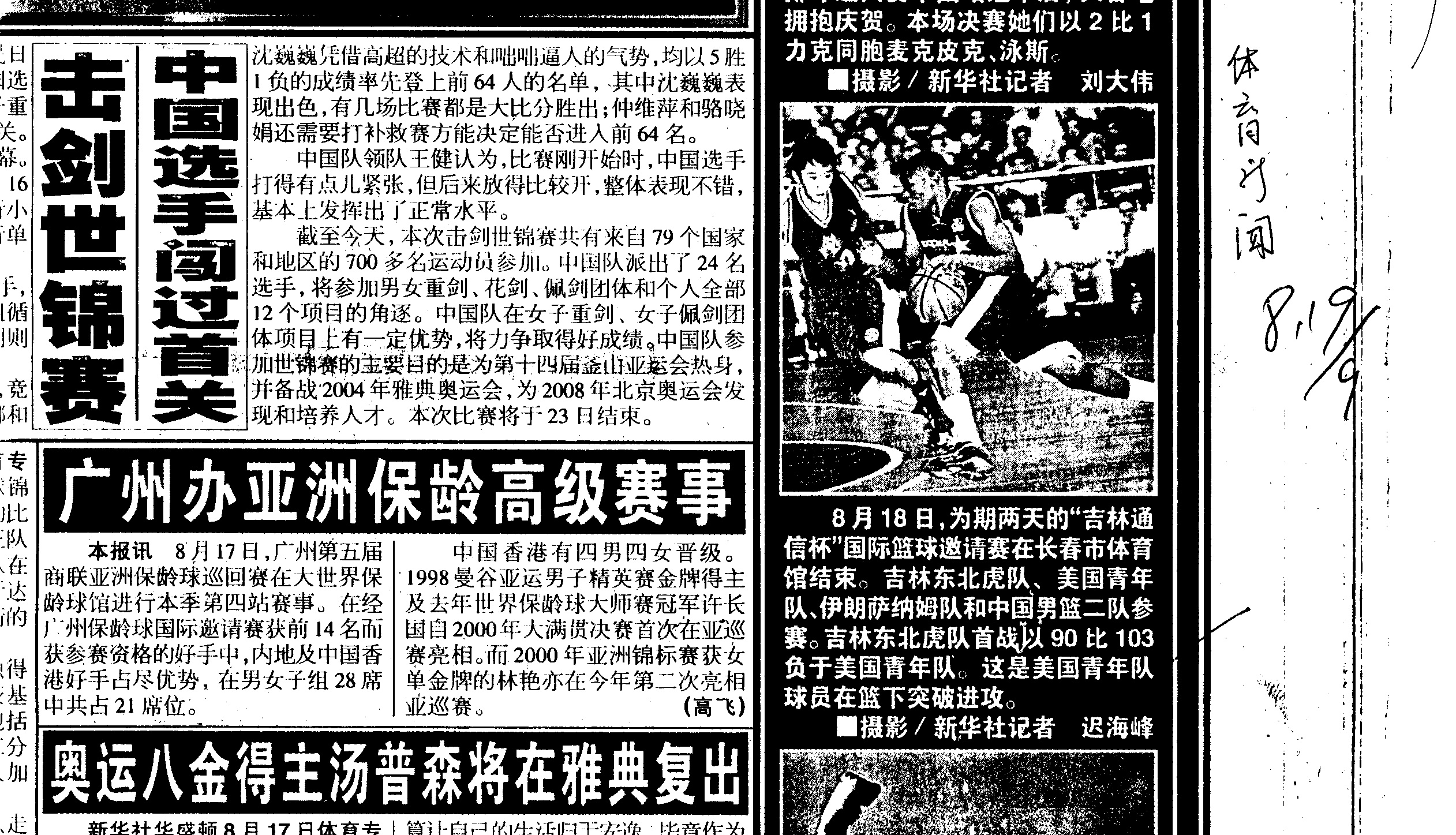
The National Elite All-Stars selected by SAIS enjoyed friendly yet fierce competition throughout China traveling and competing in provinces (like American states) such as Hebei, Jilin and Beijing. The girls team learned a great lessen for future trips as we lost all 3 games to the very strong China National Women’s Jr. Team. The China girls were older and more experienced than the National Elite Girls. The girls were also not accustomed to playing with FIBA rules which designate a larger court, bigger size basketball, wider lanes and different time out and substitution patterns.
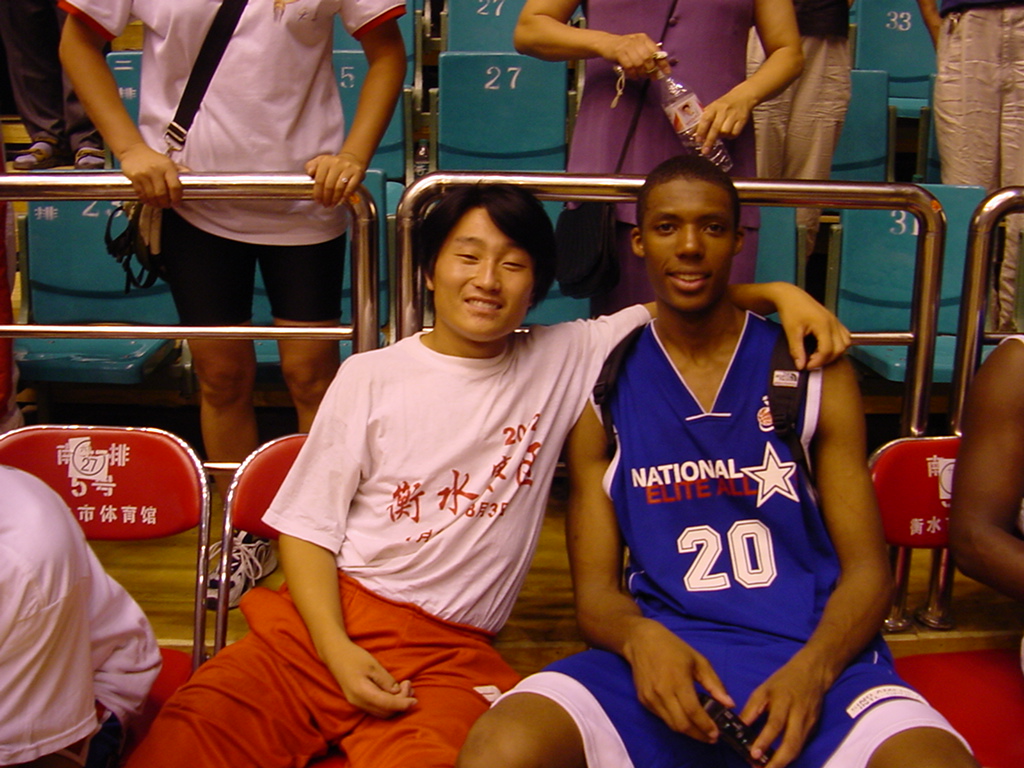
The boys did much better although losing 2 of 3 to the China National Jr. Team played extremely well and though questionable officiating. It became evident in the third game we had a stronger team when The National Elite All-Stars outclassed the China team by 29 on a nationally televised (CCTV) game. The team continued to perform well, losing only one other game and dominating the China National Jr. Finals to a complete record of 5-3. The star for the Boys team was 5 9’ guard Darryl ‘Showtime’ Hill from Queens, NY. The current freshman at St. John’s University dominated every game and averaged close to 29 points a game shooting 54% from the field. Other top performers included rising Junior, 6 8’ Forward , Juan Diego Palacious (Our Savior New American H.S. , Centereach NY) who averaged 23 points and 12 rebounds a game, and Donald Copeland 5 9 G Jersey City, NJ (Seton Hall University) 19 points 5 assists 60% 3pt.
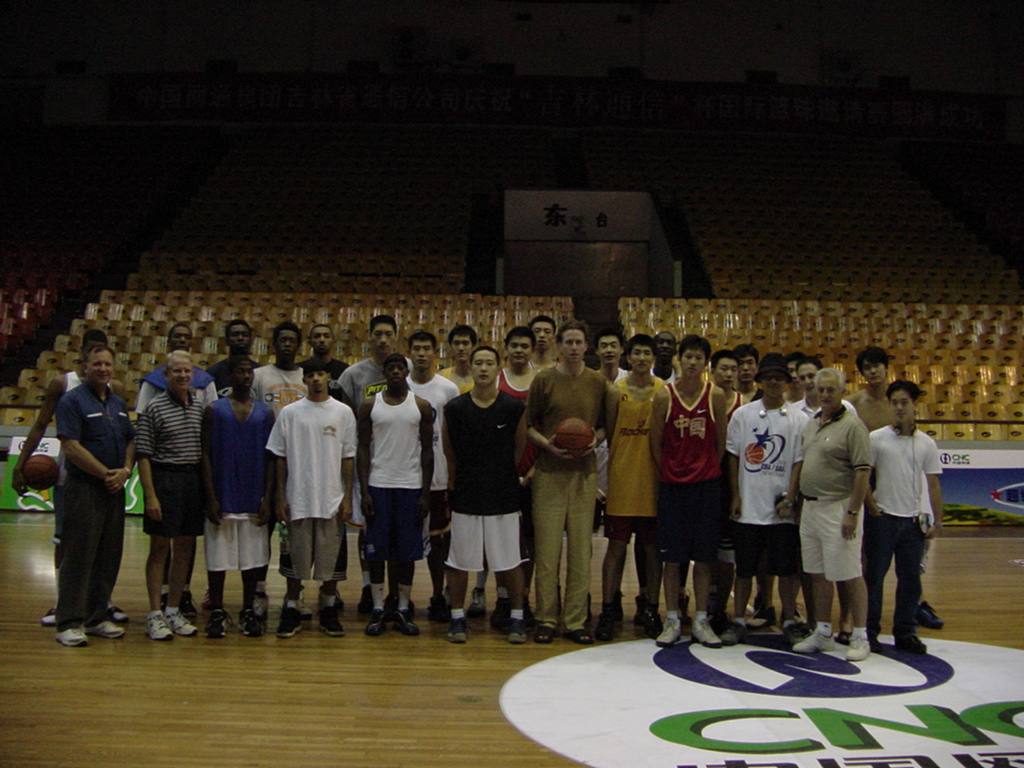
US Elite All-Stars with China National Jr. Team
The China teams selected from throughout the country had great size, talent, speed and athleticism. Amazingly, both teams played half court man to man defense. The play style was rough and aggressive, the officials called the game similarly. The girls team played a hi tempo fast break ½ court pressure game. The girls were tall and lean and good and could really shoot–in my opinion this team in the US would compete with the likes of UCONN and Tennessee. The boys played more of a power and strength game. Playing total team basketball, the Chinese worked the bal around and focused on an inside game led by 7 1 center. Although we did encounter some excellent shooters including Yi Jilin, the primary focus of the team was Tong 7 ft 1 big man with a soft touch who trains with Yao Ming. The boys team was modeled by the National coaches whom I was told had a strong Russian influence. Other interesting observations I noticed in the coaching included: 1) the coaches sit the entire game and do not stand or yell, instructing the team only in time out situations. Never yelling at the officials., when I would argue a call I was given a strange look by not only the officials but the scorers table personnel , the spectators and the uniformed military that were present every game. 2) The coaches continue to play there players regardless of foul trouble (Good players fouled out in the first half). 3. Although excellent off the ball defenders and rebounders, the Chinese teams did not full court or ¾ court press or trap in the half court. 4) The locker rooms were like board rooms with big long board room tables and leather chairs, strange by US standards but common place in Asia. Bathrooms as travelers know are cold old world or holes, very different to US standards.
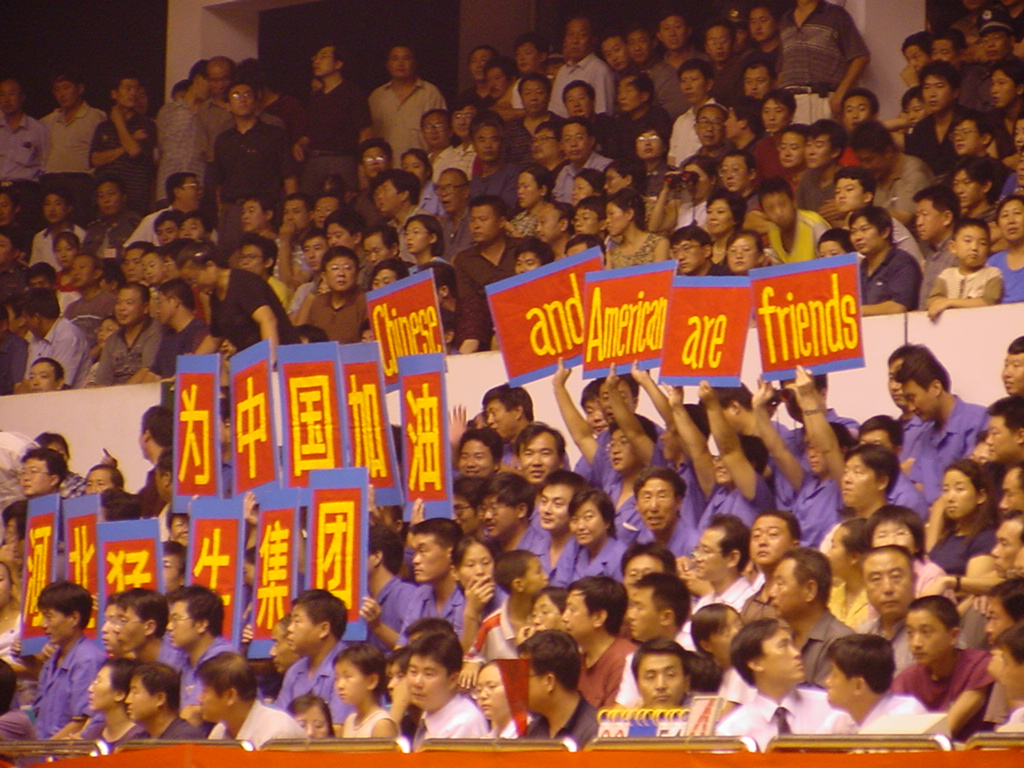
The playing atmosphere for our teams was excellent and every arena was sold out with people waiting outside sometimes in the pouring rain just to catch a glimpse of the team coming in. I can remember giving locker room speeches in small rooms with small curtins on the windows which did not cover the entire window. The outdoor spectators were peeping thru the small cracks, just to get a look of the Americans. Smokoing is still allowed in public places in China and we could see the dusty smoke rising up throughout the arena. Without airconditioning, the Chinese spectators had the Chinese fans which wavewd by the thousands and looked like doves flying throught the place.The National Jr. Finals was played in a brand new state of the art arena which was built for the Beijing 2008 Olympics games, an astonishing venue with 2 NBA size practice facilities in the back.The Chinese teams utilized size and strength and team play while the US team relied on speed quickness and individual efforts. Our star guard Darryl ‘ Showtime’ Hill was too quick for the Chinese defenders and npo Chinese defenders were able to keep up with his quickness!
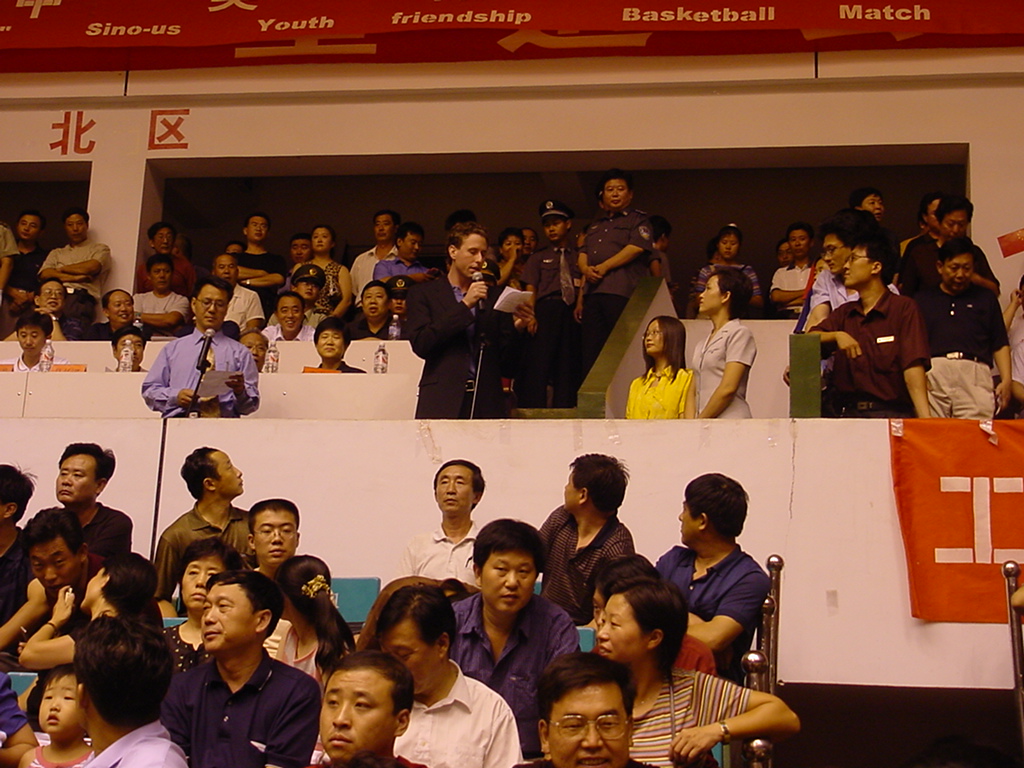
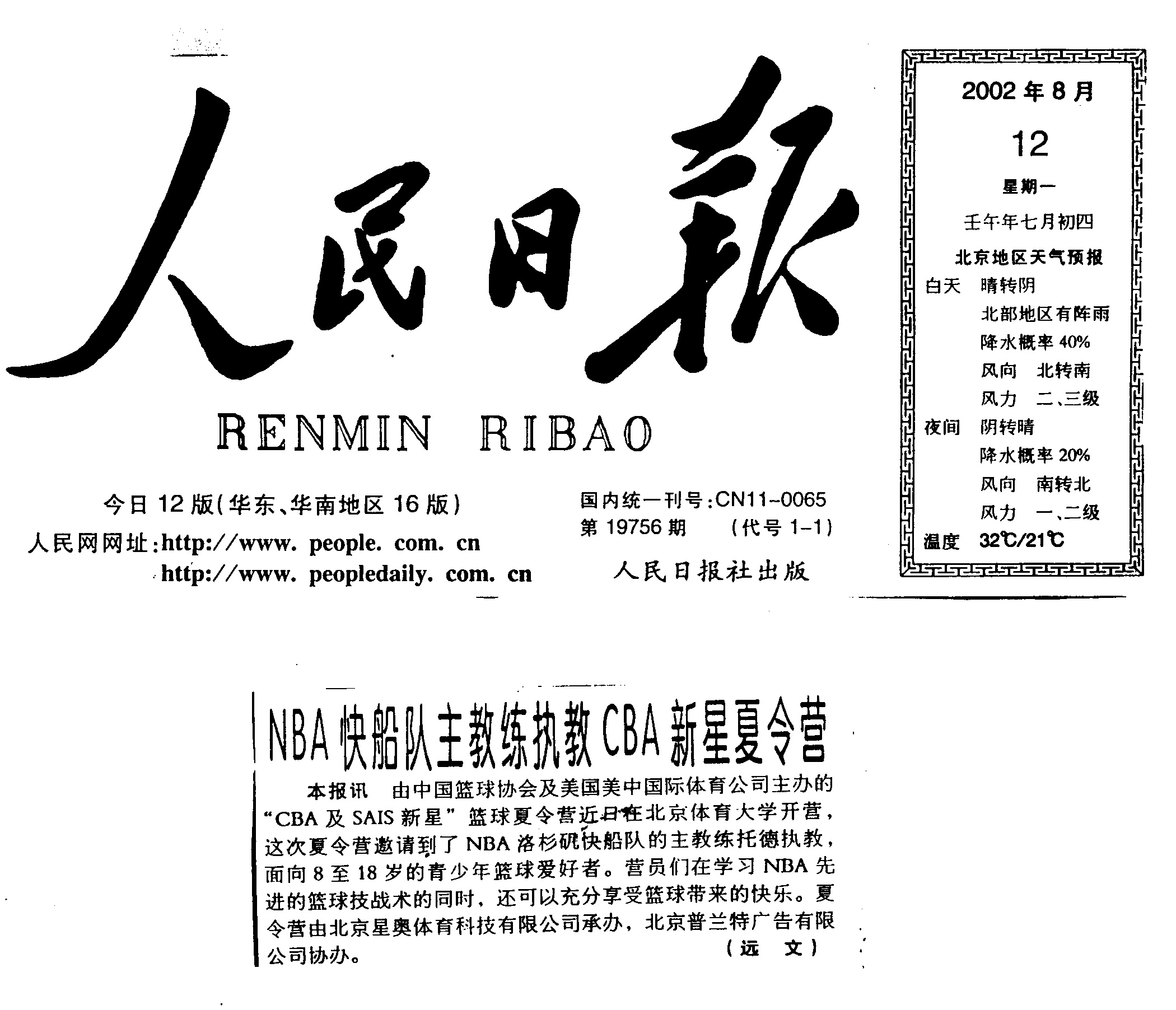
Our CBA / New Star camp was conducted following the tour. We invited 11 coaches (See coaches bios attached) including former NBA head Coach, Jim Todd (LA Clippers) and San Antonio Spurs Guard Speedy Claxton. The camp was conducted for 100 Chinese boys ages 8-18 , August 26-30th at the Beijing University of Physical Education. The players were selected randomly by the CBA and 40 of them were sent by Sinjin #8of the Dongbai Tigers-the Michael Jordan of the CBA. Simultaneously a coaches clinic for the top 100 including National and Olympic level coaches at the Capital University of Sports, Beijing. Interpreters were commissioned for each venue, including famous countryman and four time Olympic coach Wei Ping for the coach’s clinic. As we learned, in China students need to pass a national exam to become coaches. Students training to become coaches were utilized on the camp site. Although it was amazing to see how much farther advanced the US game is, the Chinese are hungry to learn. It wasn’t a surprise to talk with the semi-English speaking Chinese kids who knew the names of NBA players and had the skills to do the ball handling tricks we are accustomed to seeing seen on the NIKE commercials.. More so in the coaching as the young Chinese kids can watch the NBA and Nike commercials on CCTV via satellite. The camp was organized to have the American coaches with interpreters teaching drill stations on fundamentals in the morning and games in the afternoon. Campers were separated and arranged according to age and ability. It was surprising to see the skill level of the players. Although most of the coaches agreed that the more comprehisve drills were an introduction to the camps as well as the teams selected to be demonstrators for the coaches clinic. One scene that stays in my head was Cliff Warren, assistant coach at Georgia Tech taking turns break dancing with the basketball with the Chinese kids in the circle and Adam Ginsberg (Northeastern) and Tim Maloney (U. Florida) clapping along and whistling. The Chinese kids and coaches worked hard, all thecoached claimed they were more attentive than their American counterparts. China will continue to improve and become a world power in the sport of basketball. Improved training, facilities and coaching methods will integrate a heightened interest of the game NBA players especially top draft pick, Yao Ming combined with a pool selected of (1.5 billion) people will prove this theory. I was told that China has 215 7 footers in their 25 and under program. Asians typically have long lean bodies (basketball bodies) and as China continues to develop as an emerging nation, nutrition rates and standard of living will rise as will athletic performance. China has system in place to find players and keep them in sports as in the US they may tail off without structure. The Socialism mindset also teaches family first an ideology carried over to team sports as well. Chinese players would rather win a game than be the leading scorer. Lastly as the CBA league grows a financial incentive will be apparent to the kids who are in the grassroots, as one coach phrased it, China basketball is like the US in the 1950’s.
Although this was the first of the exchanges of exchanges with the CBA, we are very happy with the outcome of the tour and camp. As well as continuing with the New Star and coaches clinic and other basketball events in China to continue the exchange, SAIS has arranged future events in the near future including the Beijing Sports Academy team to travel to Utah to open the season with the Number 1 USA Today pre-season girls H.S. team in the country, host Mountain View HS and next spring a US tour of the National Jr. Team to the US (Dates TBA).
Most of the games and camp day were televised and the venues were filled. The Americans were treated like dignitary royalty at times and even enjoyed police escort during most of the travel. The boys team conducted clinics for the orphan kids in Jilin and were very well known as Beijing television produced a 3 minute clip for the Beijing TV news. The TV and print media coverage in China was very extensive. Our teams played on CCTV to a national audience of 100 million—that more tha the number of people who watched the Super bowl. I conducted over 50 TV interviews including CCTV news at 10pm estimated 1 Billion viewer ship. The Chinese remarked on the American skill and talent, and we respected the height and strength of the Chinese. The CBA and SAIS looks forward to working together to provide future events and dealings between the youths of our two countries.
CHINA SPORTS DAILY NEWSPAPER